
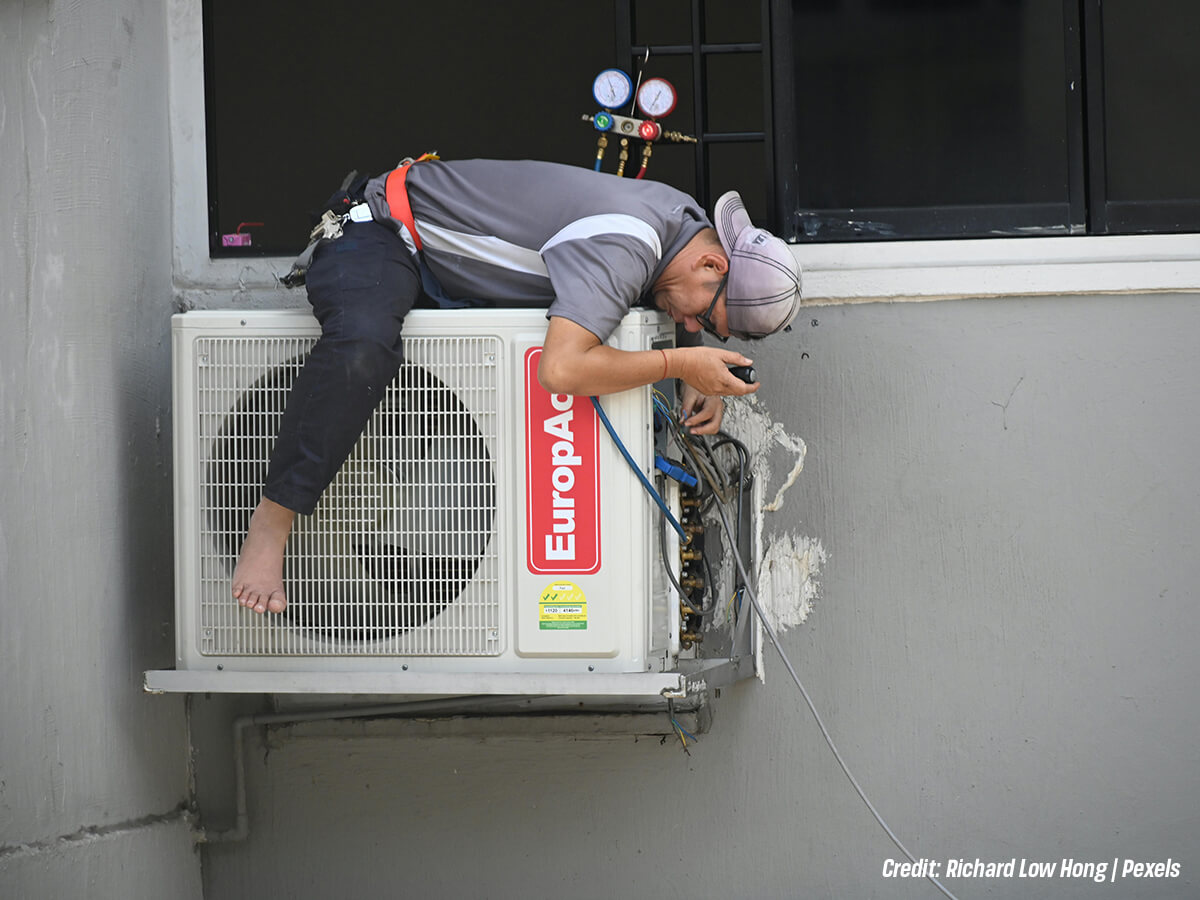
Despite their importance, commercial HVAC systems are often relegated to an “out of sight, out of mind” status until a catastrophic failure occurs. Relying on a reactive, run-to-fail approach is one of the most costly mistakes a facility manager can make.
To truly maximize the return on your capital investment, a proactive approach is required. Scheduled, comprehensive maintenance is not merely an operational expense; it is a proven, highly effective strategy for extending the life of your commercial HVAC assets.
Here is an in-depth look at exactly how and why scheduled maintenance adds years to the lifespan of your equipment, prevents catastrophic breakdowns, and saves you money in the long run.
The Fallacy of the “Run-to-Fail” Strategy
To understand the value of preventative care, it is crucial to understand the inherent flaws of reactive maintenance. A run-to-fail strategy involves doing nothing to the equipment until a component breaks, at which point emergency service is dispatched.
While this might seem like a way to save money on monthly maintenance contracts, the long-term financial mathematics paint a very different picture.
Commercial HVAC units are intricate systems where every component relies on the proper functioning of the others. When one part begins to fail, it places an unnatural and unintended strain on the rest of the system.
For example, a simple, inexpensive air filter that has become severely clogged restricts airflow. This restriction forces the blower motor to work harder, increasing electrical consumption and running hot. Simultaneously, the lack of airflow over the evaporator coil can cause it to freeze solid. When the ice eventually melts, it can overflow the drain pan, causing water damage to the building.
Furthermore, the liquid refrigerant returning to the compressor (which is expecting a gas) can cause the compressor valves to shatter—a phenomenon known as “liquid slugging.”
In this scenario, skipping a routine filter change directly leads to the premature death of the compressor, which is the heart and most expensive component of the HVAC unit. Scheduled maintenance interrupts this destructive domino effect before it begins.
How to Reduce Mechanical Wear and Tear
Commercial HVAC systems endure thousands of hours of operation every single year. This constant operation naturally leads to mechanical wear and tear. Belts stretch and fray, bearings lose their lubrication, electrical connections vibrate loose, and moving parts grind against one another.
During a scheduled maintenance visit, a certified HVAC technician meticulously inspects the system to mitigate this wear.
- Lubrication: Motors, fans, and blowers require specific types of lubrication to minimize friction. Friction generates excess heat, which degrades metal components and breaks down electrical insulation. By ensuring all moving parts are properly lubricated, technicians significantly extend the life of these motors.
- Belt Replacement and Tensioning: Loose belts slip, reducing the efficiency of the blower and wearing out the pulleys. Over-tightened belts place immense strain on the motor bearings, causing them to fail prematurely. Technicians replace worn belts and adjust tension to the manufacturer’s exact specifications.
- Electrical Inspections: Contactors are relays that turn high-voltage components, like the compressor, on and off. Over time, the electrical arcing causes the metal contacts to pit and burn. This pitting causes voltage drops, which makes the compressor run hotter and harder. Identifying and replacing a pitted contactor during a routine check can save a multi-thousand-dollar compressor from burning out.

Restoring Heat Transfer Efficiency
The fundamental purpose of an air conditioning or refrigeration system is to move heat from one place to another. It achieves this through the condenser and evaporator coils.
Because outdoor units are exposed to the elements, condenser coils rapidly accumulate dirt, dust, pollen, leaves, and pollution. Indoor evaporator coils accumulate dust and biological growth. When a layer of dirt coats these coils, it acts as an insulator, severely inhibiting the system’s ability to transfer heat.
When heat transfer is restricted, the system has to run significantly longer to achieve the thermostat’s setpoint. This extended run time—often referred to as long-cycling—means the compressor and motors are accumulating operational hours much faster than they should. A compressor that is forced to run 30% longer every day due to dirty coils will have its lifespan reduced proportionally.
Scheduled maintenance includes deep chemical cleaning of both the evaporator and condenser coils. By restoring the coils to their factory-clean state, heat transfer efficiency is maximized. The system cools the space quickly, shuts off properly, and preserves its operational lifespan.
Managing Harsh Environments and Specialty Equipment
Not all commercial HVAC systems operate in standard office environments. Many facilities house specialized operations that introduce extreme environmental stressors to the mechanical equipment. If these specialized assets are not aggressively maintained, they will fail well before their expected end-of-life date.
A prime example is found in aquatic centers, hotels, and athletic facilities with indoor pools. The air inside a natatorium is highly saturated with moisture and airborne chloramines—chemical compounds formed when chlorine reacts with organic matter. This environment is incredibly corrosive to standard metals and HVAC components.
Facilities with aquatic centers require rigorous oversight and specialized equipment to handle these harsh conditions. Investing in routine, professional indoor pool Dectron service ensures that the corrosive mix of chemicals and high humidity doesn’t destroy the unit’s internal components, coils, and ductwork prematurely.
Similarly, other commercial spaces, such as manufacturing plants, ice rinks, and vertical farming facilities, face immense moisture loads that can compromise both the building envelope and the mechanical infrastructure.
Managing these heavy moisture loads requires dedicated care and precision calibration, making routine Seresco dehumidifier service essential. Regular maintenance ensures these high-capacity dehumidification systems are operating at peak efficiency, preventing systemic moisture damage, mould proliferation, and premature equipment degradation.
Preventing Harmful Short-Cycling
Another major threat to the lifespan of a commercial HVAC asset is short-cycling. This occurs when a unit turns on, runs for a very brief period, shuts off, and then immediately turns back on again.
The most stressful moment in an electric motor’s operation is the moment it starts. Starting a compressor requires a massive influx of amperage – often up to five times its normal running current. If an HVAC system is short-cycling, the compressor is being subjected to this massive electrical and mechanical stress dozens of times an hour.
Short-cycling is rarely a sign that the equipment is permanently broken; rather, it is usually a symptom of a maintainable issue. It can be caused by low refrigerant levels (triggering a low-pressure safety switch), restricted airflow, a malfunctioning thermostat, or an oversized system.
Routine maintenance involves checking refrigerant charges and testing all safety controls, ensuring the system runs in the long, smooth cycles it was engineered for, thereby protecting the compressor from an early death.
Protecting the Integrity of the Drain Lines
While it may seem like a minor detail, the condensate drainage system is a crucial part of your HVAC asset. Air conditioners pull vast amounts of humidity out of the air. This moisture condenses into water and flows into a primary drain pan, eventually exiting the building through a PVC drain line.
Over the course of a cooling season, algae, mould, and sediment can build up inside these drain lines, creating a complete blockage. When the water has nowhere to go, it backs up into the unit.
Water backing up into a commercial HVAC unit can cause catastrophic damage. It can short out expensive control boards, rust the interior cabinet, and destroy variable frequency drives (VFDs).
During a scheduled maintenance visit, technicians flush and clear the condensate drain lines and treat the drain pans with algaecide tablets, ensuring that biological growth does not compromise your expensive mechanical and electrical components.

Preserving Manufacturer Warranties
Commercial HVAC equipment comes with substantial manufacturer warranties, often covering major components like the compressor or the heat exchanger for five to ten years. However, these warranties are rarely unconditional.
Almost all major commercial HVAC manufacturers include clauses in their warranty documentation stating that the warranty is only valid if the equipment is regularly maintained by a licensed professional.
If a catastrophic failure occurs and you attempt to make a warranty claim, the manufacturer will ask for comprehensive service records. If you cannot produce documentation proving that the system has received scheduled maintenance, your claim will be denied.
In this regard, scheduled maintenance extends the financial life of your asset by ensuring that you are completely protected against factory defects for the full duration of the warranty period.
The Financial Bottom Line of HVAC Maintenance
Ultimately, scheduled maintenance should be viewed as a tool for asset management. If a commercial rooftop unit costs $30,000 to replace and is engineered to last 15 years, its depreciation is $2,000 per year.
If poor maintenance causes that unit to fail at the 10-year mark, you have effectively thrown away $10,000 in lost asset life, not to mention the inflated energy bills, emergency repair costs, and tenant dissatisfaction you endured along the way.
By investing a fraction of that cost into a customized, scheduled maintenance agreement, you ensure that your equipment reaches—and often exceeds—its engineered lifespan.
Partner with the Commercial HVAC Experts
Secure the lifespan of your commercial heating, cooling, and specialty equipment today!
Contact King Air at 905-939-0777 or email us at kingrefrigeration@gmail.com to discuss a customized scheduled maintenance plan for your facility.