
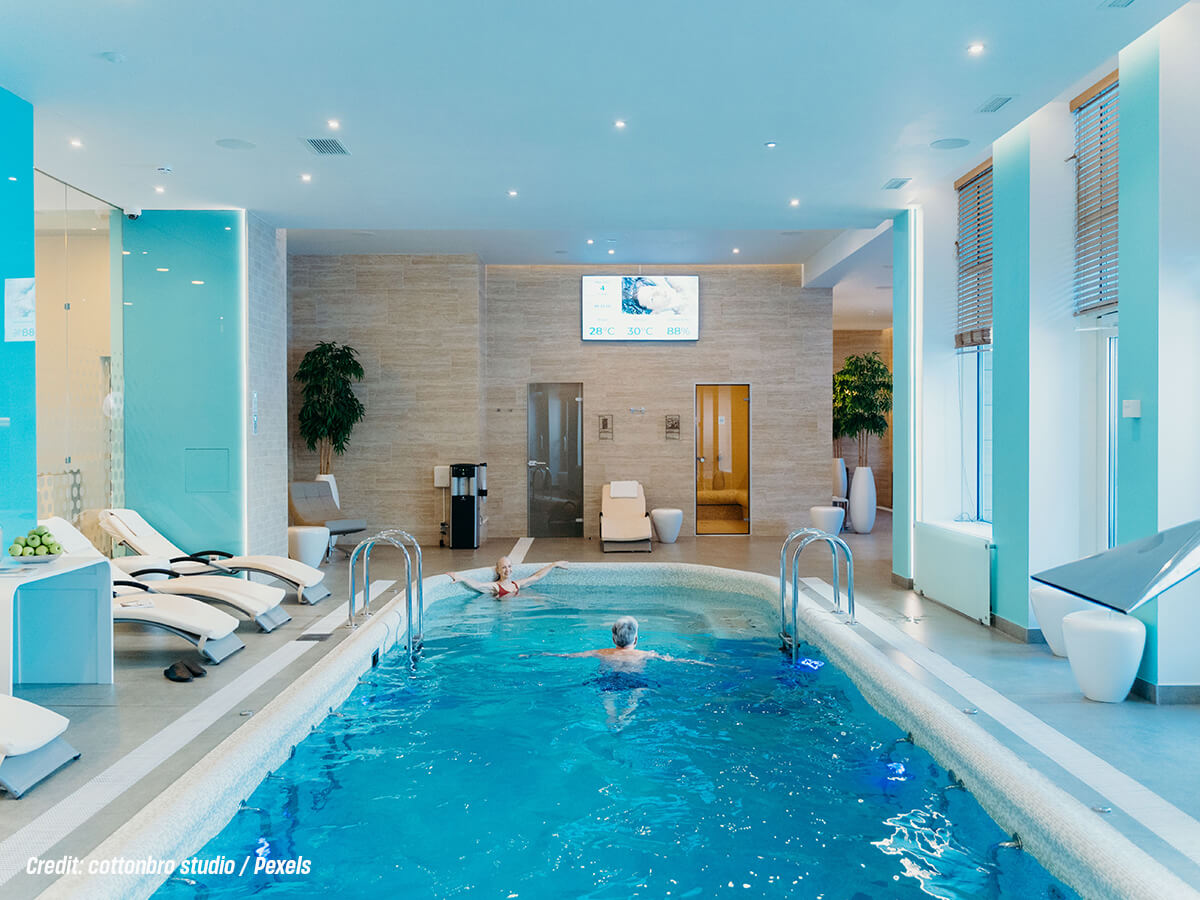
An indoor pool is essentially a massive body of heated water constantly attempting to evaporate into a confined space. Without a properly engineered and maintained mechanical ventilation and dehumidification system, this environment can quickly turn toxic, leading to severe structural damage to the building and significant health risks for swimmers.
In the realm of indoor aquatic facilities, your ventilation system is not a secondary feature. Instead it will be your absolute first line of defence.
The Unique Physics of the Indoor Pool Room
To understand why ventilation is so critical, it is essential to understand the basic physics at play inside an indoor pool enclosure.
Water naturally evaporates. The rate at which this evaporation occurs depends on several factors, primarily the surface area of the pool, the temperature of the water, the temperature of the ambient air, and the activity level in the pool.
In a typical indoor setting, the air temperature must be maintained a few degrees warmer than the water temperature to minimize this evaporation and keep swimmers comfortable when they step out of the water.
However, evaporation is inevitable. As water turns into vapour, the relative humidity inside the room climbs. If the air becomes saturated and cannot hold any more moisture, that moisture will seek out the coldest surfaces in the room—typically windows, exterior walls, and metallic fixtures—and condense back into liquid water.
In cold climates, where the temperature differential between the warm, humid pool room and the freezing outdoors is extreme, the potential for rapid and heavy condensation is drastically increased.
This is not just a cosmetic nuisance. Eventually condensation can even become a highly destructive force. Pool water is chemically treated, meaning the evaporated water carries microscopic corrosive elements with it. When this moisture settles on structural components, it accelerates the rusting of steel beams, ductwork, and door frames. It penetrates drywall, insulation, and wood, creating the perfect breeding ground for toxic black mould, mildew, and rampant wood rot.
Over time, poor ventilation can compromise the actual structural integrity of the building envelope, leading to repair bills that can easily reach tens or hundreds of thousands of dollars.
The Invisible Threat of Chloramines and Air Quality
Beyond the structural implications, inadequate ventilation poses a serious threat to human health. Most people are familiar with the distinct, strong “pool smell” that hits them when they walk into a poorly ventilated indoor aquatic center. A common misconception is that this smell indicates a clean pool with plenty of chlorine. In reality, it signifies the exact opposite.
That pungent odour is the smell of chloramines, also known as combined chlorine. When free chlorine in the pool water reacts with organic nitrogen compounds introduced by swimmers—such as sweat, oils, cosmetics, and urine—it forms chloramines. These chemical byproducts off-gas from the surface of the water and hover in the air, particularly in the lower breathing zone just above the pool’s surface.
In an outdoor pool, natural wind and open air disperse these chloramines harmlessly into the atmosphere. In an enclosed indoor pool without aggressive and effective air exchange, they accumulate to hazardous levels.
Prolonged exposure to high levels of airborne chloramines causes a range of physical ailments. Swimmers and spectators may experience red, burning eyes, skin irritation, and severe respiratory distress. For competitive swimmers, lifeguards, and frequent users, inhaling chloramine-heavy air can lead to a condition often referred to as “lifeguard lung,” triggering asthma attacks, chronic coughing, and wheezing.
A high-functioning ventilation system actively combats this by constantly exhausting this contaminated, chemical-laden air out of the building and replacing it with fresh, conditioned outdoor air.
By managing the airflow patterns and ensuring that the exhaust pulls air from the pool surface level, a good system physically removes the toxins before they can be inhaled.
The Mechanics of Proper Dehumidification and Ventilation
Standard residential or commercial heating, ventilation, and air conditioning (HVAC) systems are entirely unequipped to handle the harsh, corrosive, and moisture-heavy environment of an indoor pool. If you try to use a traditional air conditioner to cool and dehumidify a pool room, the internal components will quickly rust, and the unit will fail long before its expected lifespan.
Indoor pools require specialized, heavy-duty dehumidification equipment. These systems are designed specifically for aquatic environments. They work by drawing in the warm, humid, chemical-laden air from the room, passing it over a specialized evaporator coil to cool the air below its dew point, and extracting the liquid water. This condensed water is then safely drained away or, in some advanced setups, treated and routed back into the pool.

But modern pool dehumidifiers do more than just remove water. Recycling energy is another thing they excel at. The process of condensing water vapour releases a significant amount of latent heat. High-quality systems capture this reclaimed heat and use it to either warm the dry air before it is pushed back into the room or assist in heating the pool water itself.
This mechanical heat recovery dramatically reduces the operational and utility costs of running an indoor pool during long winter months.
Achieving this balance of humidity control, temperature regulation, and fresh air exchange requires precise engineering.
If you are experiencing persistent window condensation, lingering chemical odours, or uncomfortable humidity levels, it is highly recommended to consult with professionals who specialize in indoor pool air-quality solutions. They can evaluate your specific room volume, water surface area, and current ductwork to ensure your air exchange rates meet health and safety standards.
Maintenance: How to Protect Your Pool HVAC Investment
Because the mechanical dehumidification system works incredibly hard 24 hours a day, 7 days a week, it requires a rigorous and specialized maintenance schedule. Neglecting your pool’s HVAC system will lead to decreased efficiency, spiking energy bills, and eventually, catastrophic equipment failure.
Routine maintenance should include:
- Filter replacements: The air filters in a pool dehumidifier clog much faster than those in a standard home furnace due to the heavy, moisture-dense air. Filters should be inspected monthly and replaced at least every two to three months. A clogged filter chokes the airflow, forcing the compressor to work harder and increasing the risk of the system freezing up.
- Coil cleaning and inspection: The evaporator and condenser coils are the heart of the moisture-removal process. Over time, despite filtration, microscopic dust and chemical residue can coat the coils. This acts as an insulator, preventing the heat transfer necessary for dehumidification. Coils must be professionally cleaned using specialized, non-corrosive solvents.
- Condensate drain clearing: The system pulls gallons of water out of the air daily. If the condensate drain line becomes clogged with debris or algae, the water will back up, potentially overflowing into the unit’s electrical components or leaking into the building structure.
- Refrigerant level checks: Dehumidifiers operate using closed-loop refrigeration circuits. If there is a micro-leak in the system, the unit will lose its cooling and dehumidifying capacity. Only licensed technicians can safely handle, test, and recharge these refrigerants.
- Calibrating sensors: The entire operation relies on sensitive humidistats and thermostats. If these sensors are uncalibrated or corroded by the pool environment, they will feed incorrect data to the control board, causing the unit to run constantly or not at all.
Because of the complexity and proprietary technology involved in top-tier brands, routine service should never be left to a general handyman. It is crucial to have your system inspected and maintained by a certified Poolpak technician or an expert trained specifically in the brand of equipment you operate. These technicians understand the exact tolerances, airflow requirements, and chemical vulnerabilities of specialized aquatic HVAC units.
Knowing When to Upgrade
Even with flawless maintenance, ventilation and dehumidification systems have a finite lifespan, typically ranging from 15 to 20 years depending on the operating environment. If your current system requires frequent, expensive repairs, or if you notice that it simply cannot keep the room humidity below the recommended 50% to 60% threshold during peak usage or extreme weather, it may be time for an upgrade.
Modern units are vastly more energy-efficient than those manufactured a decade ago. Upgrading to a newer system with variable-speed fans, advanced heat recovery, and smart digital monitoring can drastically reduce your monthly hydro and gas bills while simultaneously providing a safer, more comfortable swimming environment.
When considering a replacement or a major repair, always partner with a contractor who understands the holistic relationship between the building envelope, the pool water, and the air handling system.

Final Thoughts
Owning an indoor pool should be a source of relaxation and health, not a constant battle against mould, rust, and respiratory irritation. By recognizing that the air above the water is just as important as the water itself, you can protect your property and ensure a safe, inviting atmosphere for everyone who swims.
Remember that evaporation never sleeps, and neither should your ventilation strategy. Stay proactive with your maintenance, monitor your room’s humidity and odours closely, and never hesitate to call in the experts when the environment feels off-balance.
For expert diagnostics, reliable repairs, and comprehensive indoor pool & HVAC services, the professionals are ready to help you reclaim your air quality.
Protect your investment and your health by contacting King Air at 905-939-0777 or via email at kingrefrigeration@gmail.com today.