
Key Takeaways
- Comprehensive Liability Shield: Fully insured HVAC contractors protect facility managers from catastrophic financial losses caused by property damage or workplace accidents.
- Coverage for Specialized Systems: Advanced dehumidification and environmental controls require specialized technicians whose work is fully backed by adequate insurance policies.
- Regulatory and Legal Compliance: Proper insurance guarantees adherence to local safety codes and commercial property lease mandates.
- Risk Management Assurance: Verifying general liability and commercial auto coverage ensures smooth operational continuity without unexpected liabilities.

Commercial heating, ventilation, and air conditioning (HVAC) systems are the backbone of modern facility management. Whether managing an indoor athletic center, a commercial office building, a healthcare facility, or an industrial warehouse, keeping climate controls, ventilation, and indoor air quality running smoothly is essential to daily operations.
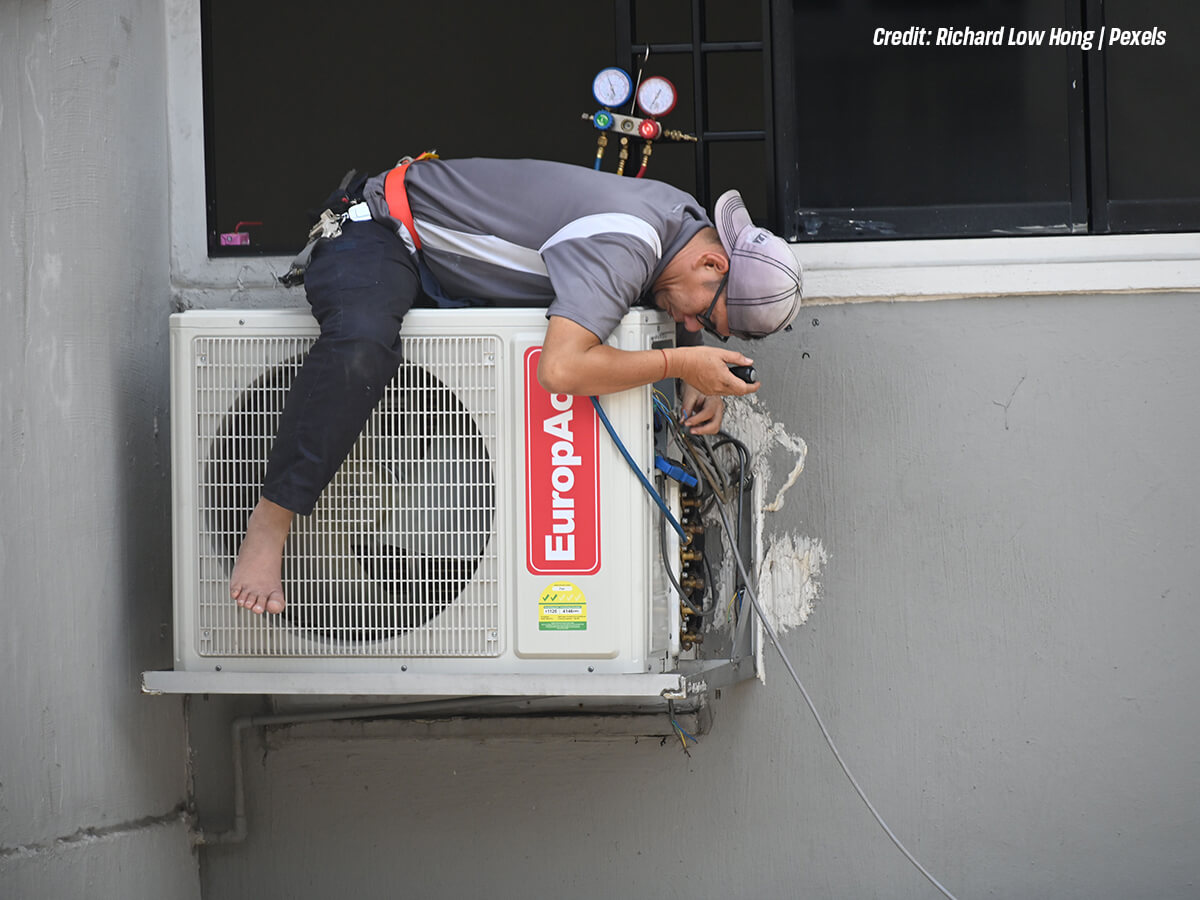
However, HVAC maintenance, installation, and emergency repair carry inherent physical and financial risks. High-voltage electrical work, refrigerant handling, heavy rigging, rooftop equipment maneuvers, and complex hydronic piping all present potential hazards.
When choosing a contractor to service your facility’s infrastructure, technical competence is only half the equation. The other critical factor is liability mitigation. Working with an uninsured or underinsured HVAC contractor exposes your business, facility, and property to immense financial vulnerability. Hiring a fully insured HVAC contractor is a non-negotiable standard for commercial facility management.
What Does “Fully Insured” Really Mean for a Commercial HVAC Provider?
In the commercial building sector, the term “fully insured” is often used loosely, but for a facility manager, it carries a very specific and legally binding definition. A truly fully insured HVAC provider carries a comprehensive package of active, high-limit insurance policies designed to cover all potential hazards on a job site.
At a minimum, a fully insured commercial HVAC provider must maintain:
- Commercial General Liability (CGL) Insurance: This covers bodily injury, third-party property damage, and personal injury caused during or after service operations. For commercial facilities, coverage limits should typically reach into millions of dollars to account for high-value building assets.
- Workers’ Compensation Insurance: This protects both the technician and the facility owner. If an HVAC worker sustains an injury while working inside your facility, workers’ compensation covers medical costs and lost wages, preventing the injured worker from suing the building owner.
- Commercial Auto Liability: Specialized service vehicles transport heavy tools, refrigerants, and equipment to your job site. Auto liability covers accidents involving service vehicles while on or around your property.
- Environmental and Pollution Liability: HVAC service involves handling chemical refrigerants, combustible gases, and potential hazardous waste. Dedicated environmental coverage protects against accidental leaks or chemical spills during system retrofits or refrigerant recovery.
What Financial and Legal Risks Do Facilities Face with Uninsured HVAC Contractors?
Allowing an uninsured or underinsured service technician onto your commercial property creates severe legal and financial exposure. If an uninsured worker suffers a severe fall from a rooftop unit or sustains an electrical shock, their primary recourse for medical expenses and lost income may target your facility’s property insurance policy.
Furthermore, physical property damage can easily escalate into thousands—or even millions—of dollars. Consider a scenario where a contractor accidentally punctures a water main line, causing structural flooding across multiple floors, or improperly wires a heavy condenser, resulting in an electrical fire. If the HVAC provider lacks adequate General Liability coverage, your facility management firm or property owner will be left footing the bill for repair costs, tenant business interruption claims, and legal defence fees.
Why Is Specialized Coverage Vital for Complex Systems Like Indoor Pool Dehumidifiers?
Certain commercial HVAC installations present elevated technical complexity and heightened operational risk. Indoor aquatic centers, municipal pool facilities, hotels, and luxury residential complexes rely heavily on specialized dehumidification systems to maintain strict humidity limits, protect structural integrity, and ensure occupant comfort.
Maintaining these critical systems requires high-level technical training and precision execution. For instance, servicing advanced dehumidification equipment demands the skill of a certified Dectron technician who understands the intricate refrigeration cycles, moisture extraction coils, and chemical corrosion risks inherent in indoor pool environments.
Improper handling of specialized refrigerant charges or electrical controls in these systems can lead to catastrophic compressor failure, severe air quality degradation, or costly structural moisture damage.
Similarly, scheduling routine Poolpak HVAC service requires contractors who not only possess deep manufacturer-specific expertise, but also carry robust insurance policies tailored to high-value mechanical equipment. When dealing with specialized environmental control equipment, a fully insured provider guarantees that high-stakes mechanical servicing is backed by financial accountability.
How Does Contractor Insurance Impact Workers’ Compensation and Property Damage Claims?
When an incident occurs on commercial property, insurance policies dictate who pays and how quickly claims are resolved. In a scenario involving a fully insured HVAC contractor, any claim follows a clear, streamlined process:
- Direct Claims Processing: The contractor’s insurer handles compensation for injured workers or property damage directly, insulating your company’s primary commercial insurance policy.
- Protection Against Loss of Coverage: Filing major structural damage claims under your building’s insurance policy can lead to skyrocketing premiums or policy non-renewal. A fully insured provider’s policy absorbs the loss.
- Compliance with Lease and Mortgage Agreements: Commercial property leases and mortgage contracts almost universally mandate that all third-party vendors operating on-site hold adequate insurance. Failure to enforce this can put building owners in breach of their financial agreements.
What Questions Should You Ask to Verify an HVAC Contractor’s Insurance Coverage?
Before issuing a purchase order or signing a long-term maintenance agreement, facility managers should rigorously verify a contractor’s insurance status. Never rely on verbal assertions or simple marketing claims.
Ask prospective contractors the following questions:
- Can you provide a current Certificate of Insurance (COI)? The COI should list your facility or property management company as an Additional Insured.
- What are your policy limits for General Liability and Workers’ Compensation? Ensure limits align with the total value and risk profile of your facility.
- Is your coverage active and issued by a reputable carrier? Verify that the policy issuer has a strong financial strength rating.
- Are your technicians certified and insured for specialized machinery? Confirm that technicians working on specialized units carry appropriate manufacturer certifications alongside full insurance coverage.
Partner with a Fully Insured HVAC Industry Leader
Protect your commercial facility, protect your bottom line, and ensure complete operational peace of mind. King Air brings decades of trusted commercial HVAC, refrigeration, and specialized environmental control expertise backed by complete insurance coverage and industry-leading standards.
Whether you need emergency repairs, routine mechanical maintenance, or specialized indoor pool dehumidification services, our team is equipped to deliver superior results safely and professionally.
- Phone: 905-939-0777
- Email: kingrefrigeration@gmail.com
Contact King Air today to request a Certificate of Insurance and schedule your commercial HVAC service consultation!