
Overview
- Indoor pool enclosures require continuous moisture extraction to maintain relative humidity levels between 50 percent and 60 percent. Uncontrolled moisture damages structural framing, walls, and indoor air quality.
- Indoor pool moisture management through simple exhaust ventilation relies on drawing in outside air to replace warm humid air. This process works well in dry climates but loses effectiveness during humid summers.
- Ventilation systems exhaust conditioned air continuously, which increases heating bills during cold Canadian winter months. Heat recovery ventilators help lower energy losses but still depend on low outdoor humidity.
- Dedicated mechanical dehumidifiers for pools extract water vapour directly from the air through refrigeration cycles. These units reintroduce latent heat back into the space to reduce overall heating demands.
- According to the National Research Council Canada, unmanaged indoor humidity leads to structural decay, mould formation, and severe masonry spalling in northern climate envelopes.
- Choosing between ventilation and mechanical dehumidification depends on local climate data, room size, pool surface area, operating budgets, and winter heating costs.
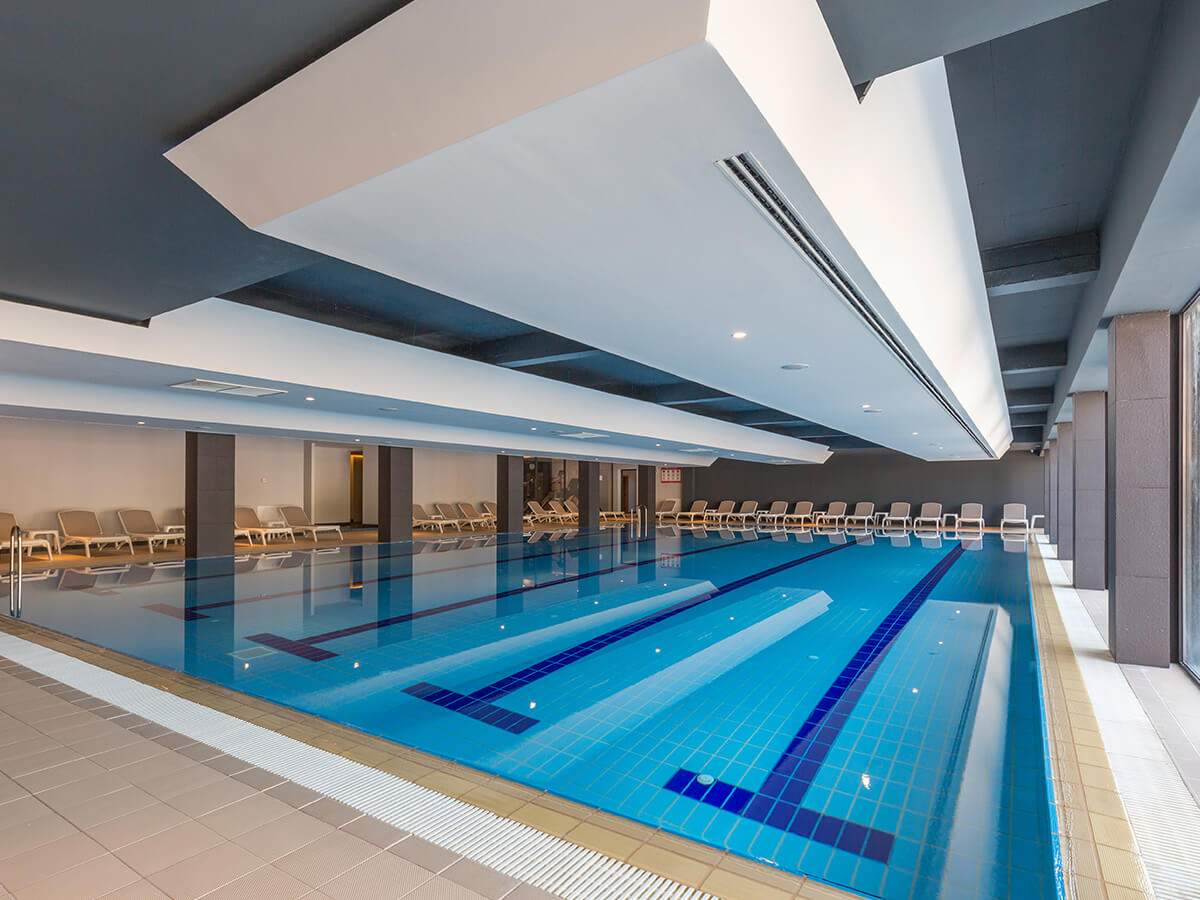
Indoor swimming pools constantly release water vapour into surrounding air. Managing this moisture requires a direct choice between exhaust ventilation systems and refrigeration-based mechanical dehumidification units. Maintaining an indoor relative humidity range of 50% to 60% prevents structural damage while protecting indoor air safety.
Air temperature, pool surface area, and water temperature dictate total daily evaporation rates. Ventilation replaces indoor air with outside air, whereas dehumidifiers extract airborne water while retaining heat energy inside the enclosure. Selecting the correct system preserves building materials and controls long-term operating expenses.
Why is Your Indoor Pool Room So Humid?
Managing indoor pool relative humidity requires balancing air temperature, water temperature, water surface agitation, and air distribution patterns.
- Water temperature higher than air temperature
Warm pool water evaporates rapidly when surrounding room air is colder. Water molecules escape into the air to balance thermal pressure. Maintaining room air two degrees Celsius above pool water temperature reduces evaporation rates significantly.
- Large, exposed surface areas
Uncovered pool surfaces release continuous moisture into the enclosure. Every square metre of open water acts as a source of airborne vapour. Active pool use creates ripples that expand total surface area, accelerating moisture output into the space.
- High air velocity over water
Supply air registers pointing directly at pool surfaces speed up evaporation rates. Moving air carries away saturated boundary layers above the water, allowing fresh vapour to escape continuously. Proper duct layout avoids sweeping high-velocity air across open pool water.
- Water agitation from pool features
Waterfalls, jets, and splashing pool occupants increase surface contact with air. Agitated water breaks into fine droplets, accelerating the transfer of liquid water into airborne vapour. Continuous water features require higher total dehumidification capacity to keep moisture levels stable.
- Inadequate vapor barrier design
Building envelopes without continuous interior vapour retarders absorb warm air moisture. Moisture migrates through drywall, concrete, and wall studs, causing hidden saturation that raises ambient room humidity levels continuously.
What Happens When Indoor Pool Moisture Gets Out of Hand?

Uncontrolled humidity levels above 60% cause physical damage to building structures and indoor surfaces. Excess moisture creates environmental conditions that foster mould, bacteria, and structural decay.
- Structural frame rot and decay
Wood wall studs and roof trusses absorb airborne water vapour in humid pool enclosures. Persistent high humidity rots timber framing, weakening main structural supports over time. Structural repairs require costly wall tear-outs and framing replacements.
- Metal corrosion from chloramines
Evaporated pool water carries chloramines into room air. Moisture containing disinfection by-products corrodes steel fasteners, roof decks, and electrical boxes rapidly. Unprotected metal components rust, snap, or fail under continuous load.
- Mould and mildew formation
Relative humidity levels exceeding 60% create ideal growth conditions for toxic mould spores on drywall, ceilings, and grout lines. According to Health Canada guidelines, exposure to indoor mould causes respiratory irritation, allergic reactions, and asthma complications in residents.
- Window and wall condensation
Humid air touches cold window glass or exterior walls, reaching dew point and forming liquid water drops. Water streams down glass frames, pooling on floor surfaces and rotting windowsills. Persistent condensation damages surrounding wallboard and paint coatings.
- Peeling finishes and wall degradation
High vapour pressure forces moisture through interior paint, wall coverings, and ceiling plaster. Paint blisters, peels, and flakes off drywall surfaces. Gypsum board absorbs liquid water, softens, sags, and eventually falls away from ceiling joists.
Benefits and Limitations of Ventilation
Exhaust fan ventilation for indoor pools controls moisture by pushing humid room air outside while pulling in outdoor air. This approach offers specific performance benefits alongside seasonal operational constraints.
- Lower upfront equipment purchase costs
Ventilation fans and air ducts require lower initial capital investment than mechanical dehumidifiers. Simple exhaust setups fit small equipment budgets during initial construction. Basic fans contain fewer complex mechanical parts than refrigeration compressors.
- Removal of chloramines and chemical odours
According to ASHRAE Standard 62.1-2022, introducing outdoor ventilation air dilutes airborne chloramines and chemical off-gassing from pool chemicals. Direct exhaust systems vent air contaminants outside, improving breathable air quality inside the pool room.
- Dependence on outdoor weather conditions
Ventilation relies entirely on outdoor air being drier than indoor pool air. During humid summer months, incoming outdoor air carries extra moisture into the pool room. Ventilation fans fail to lower indoor humidity when outdoor dew points rise above 15 degrees Celsius.
- High winter space heating expenses
Exhausting warm pool air during cold Canadian winters discards valuable heat energy continuously. Heating cold outdoor replacement air up to 30 degrees Celsius demands large amounts of natural gas or electricity. Winter heating costs increase operational budgets significantly.
- Heat recovery ventilator efficiency limits
Installing heat recovery ventilators captures sensible heat from exhaust air to warm incoming fresh air. Heat exchangers do not extract latent heat bound in water vapour. Frost accumulation on heat recovery cores limits performance during severe winter freezes.
- Negative air pressure risks
Exhaust ventilation systems must maintain slight negative air pressure to keep pool smells out of adjacent living spaces. Oversized exhaust fans pull cold outdoor air through building envelope cracks if supply air fans are not balanced precisely.
Benefits and Limitations of Dehumidifiers
Dedicated pool room dehumidification systems use internal refrigeration coils to condense water vapour directly out of the air stream. These units recirculate warm dry air back into the room while collecting condensed water.
- Year-round humidity control reliability
Mechanical dehumidifiers for pools maintain set humidity targets regardless of outdoor weather conditions. Refrigeration coils condense moisture continuously during humid summer days and cold winter nights. Indoor relative humidity stays locked between 50 percent and 60 percent.
- Energy recovery through latent heat transfer
Refrigeration cycles capture latent heat released during water vapour condensation. The system redirects captured energy back into pool room air or pool water. Heat recovery features lower overall building heating requirements during winter months.
- Protection of building structural materials
Removing water vapour before air touches cool exterior surfaces prevents hidden condensation inside walls. Dry interior air keeps framing timbers, drywall, and roof assemblies free from moisture accumulation. Structural integrity remains protected over decades of pool operation.
- Higher initial capital investment
Commercial-grade dehumidifiers require higher equipment, installation, and ductwork expenditures than basic exhaust fans. Specialized anti-corrosion coil coatings and refrigeration components increase initial machinery purchases. Installation involves electrical upgrades and dedicated plumbing lines for condensate drainage.
- Regular mechanical maintenance requirements
Refrigeration compressors, blowers, filters, and refrigerant lines need scheduled inspections by certified technicians. Air filters require monthly cleaning to maintain proper airflow across evaporator coils. Coils require chemical cleaning to prevent chloramine corrosion over time.
- Auxiliary outdoor air ventilation needs
Dehumidifiers recirculate indoor air to remove moisture, but they do not eliminate chemical odours on their own. According to ASHRAE Standard 62.1-2022, pool facilities still require minimum outdoor air intake to dilute airborne chloramines. Systems must balance mechanical moisture removal with outdoor air ventilation.
How To Choose the Right System for Your Pool Room

Selecting equipment requires analyzing regional climate data, pool surface dimensions, room air volume, and building envelope construction. Evaluating capital costs against long-term operational efficiency ensures proper performance.
- Calculate total pool water evaporation rates
Determine daily water loss using surface area, water temperature, room air temperature, and air speed calculations. According to Desert Aire engineering guidelines, standard indoor pools evaporate dozens of litres of water into the air daily. Equipment sizing relies on peak evaporation estimates rather than average figures.
- Evaluate local seasonal outdoor humidity range
Analyze regional weather data to determine summer dew points and winter temperatures. Regions with hot, humid summers require mechanical dehumidification because outdoor air cannot absorb indoor moisture. Cool, dry regions manage small moisture loads using exhaust systems fitted with heat recovery cores.
- Inspect building envelope vapour barrier design
Examine wall construction, window glass ratings, and ceiling insulation values. Buildings with double-pane glass and continuous interior vapour retarders tolerate temporary humidity variations better. Poorly insulated walls require continuous mechanical dehumidification to keep surface temperatures above dew points.
- Determine operational energy cost targets
Compare initial equipment prices against monthly electric and gas bills over a ten-year lifespan. Mechanical dehumidifiers cost more upfront but save energy by recycling sensible and latent heat back into the enclosure. Exhaust ventilation fans cost less to buy but raise winter fuel bills.
- Assess chloramine exhaust and fresh air requirements
Plan air distribution ductwork to capture heavy chloramine gases resting above water surfaces. Combine mechanical dehumidifiers with dedicated fresh air intakes to meet health standards without over-ventilating. Low-level return air ducts pull off-gasses away from swimmer breathing zones.
- Review system sizing with climate control specialists
Work with experienced HVAC professionals to size duct layouts, supply registers, and moisture extraction capacities. Professional load calculations prevent equipment under-sizing, window condensation, and premature structural failure. Accurate system design balances airflow distribution with quiet, efficient moisture control.
Managing moisture in indoor pool enclosures requires balancing water temperature control, air circulation, outdoor air ventilation, and mechanical dehumidification. Exhaust ventilation systems offer lower upfront costs and chemical odour dilution but struggle during humid summer months while raising winter heating bills.
Designing an effective moisture management system requires calculating precise evaporation rates, selecting corrosion-resistant equipment, and installing ductwork that covers exterior glass surfaces. Proper equipment installation preserves structural framing, protects indoor air safety, and maintains a comfortable swimming environment throughout every season. For expert assistance in designing and installing indoor pool climate control systems tailored to King Air, contact us at (905) 939-0777.